The Design Journey with Meryl Hare
Read an extract from Meryl Hare's new book Hare + Klein Design.

I have a rule that I try to adhere to: I would be happy to live in the interiors that we create.
Of course, every home is different. They all start with a unique architectural envelope, they need to suit a range of diverse interests, and they must reflect the owners’ personalities. But, that being said, the common thread of our work is our commitment to creating homes that nurture and enrich lives. There is a lot of trust involved in the process of designing the interior of a home. This is something that we are very aware of and that we never take for granted. We have to earn that trust, then use it wisely and responsibly.
So, what are the elements that guide us in creating interiors? Firstly, the clients’ way of living and their needs are foremost in our minds. We consider their aesthetic comfort level, which we discuss with them very early in the process. We like to work with them to establish a visual guide. Pictures often speak louder than words, so we explore which of our projects they are drawn to and ask them to share any imagery they have saved from websites, books or social media. It is not that we plan to duplicate any of these interiors, but this process helps to understand their visual taste.
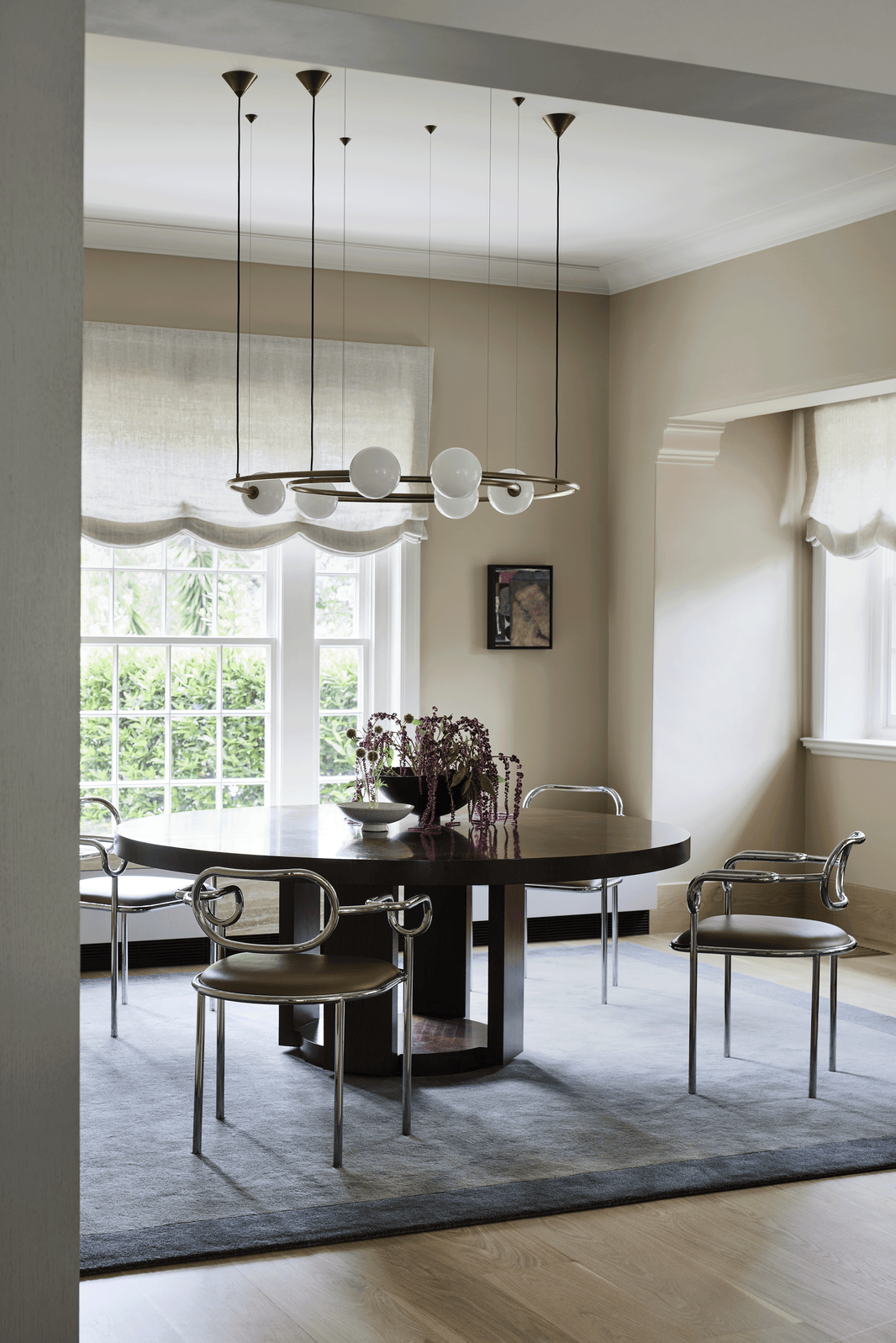
Secondly, we establish the design language that we are aiming to achieve in terms of both design and decoration. We plan the spaces with the furniture that will populate them. Generosity of scale and attention to detail are very important to me, in every project. Then there are the materials and finishes that combine to create colour, texture and contrast. We start with the floors, walls, joinery, lighting and hard surfaces then consider soft furnishings and furniture. It’s not an exercise in matching, but rather a juxtaposition of elements to create visual harmony and interest.

One of the most important qualities we strive for in our interiors is comfort – in all its senses. This comes from lighting that is subtle, except where it is required for tasks like reading or cooking or to illuminate artworks, or it may be about the colours and textures in a room, the height of a kitchen benchtop or the physical comfort of the furniture. All these elements combine to create rooms that are a joy to be in.
At the beginning of every project, we dedicate time to establishing a concept that defines what we call the project’s ‘design language’. This is the spark that ignites and guides our creative process, but there is no particular formula or method for unearthing it. Sometimes it comes in an ‘aha’ moment, and sometimes it takes longer. There are examples of both kinds of inspiration in this book. For example, in Peppermint Grove the shape of the woodwork on a verandah led to a lightbulb moment that inspired me to design the interleading doors, which established that project’s design language. When working on Bridgeview with an overseas client, whom we had never met, it took longer to establish its design language. Regardless of how it emerges, this element of a project is the basic and most important core of the emerging concept.
We assemble finishes – similar to the mood boards opening each chapter of this book – sketch design details, discuss potential ideas and delve into the unique qualities of the home and the owners’ brief until a story begins to emerge. If the kitchen is in a prominent position, we may start our concept there. Alternatively, strong architectural elements might guide our initial thinking.
I love this initial stage of our projects. We present our ideas to our clients, hoping that we have not only interpreted their brief, understood their personalities and responded to their needs, but taken it further than they could have imagined. This is the beginning of a creative journey for all of us. It’s a high-five moment!

In many of the homes we design, the kitchen is the focus of family life. It is also a place where guests inevitably linger to chat while their host prepares the meal. As a result, the kitchen is often the most detailed part of our designs, in terms of both function and aesthetics. We have to carefully select materials and finishes that are fit for purpose. Our documentation includes a myriad of technical specifications and details. The kitchen is often an integral element of the design language of a home. In this book, there are several examples of kitchens that fit within the visual tone of the house as a whole. For example, the stone used for an island bench in Skyline Penthouse is repeated as a feature in the living room. The kitchen is also the domain of the people who cook for the family. Our role is to guide the design aesthetic while fulfilling their requirements.
It can sometimes be challenging to find the right furniture pieces or rugs when we are planning the furnishing of a project. Over time we have designed a furniture range that fits with our aesthetic. We have also designed our own rugs, which are handmade in Nepal. Some of these are featured in this book, along with a description of how they were designed and the process from the initial idea to their manufacture.
It will be clear from the homes featured in this book that we don’t slavishly follow fads. Obviously, we are aware of trends and innovations in the design world, from new fabrication materials to the shapes of furniture, but they don’t all resonate with us. Will it date in two or three years? Is it mainly intended to attract attention on social media? Interior design trends come and go with bewildering speed, almost as quickly as fast fashion.
A new look that is garnering media attention is not necessarily good design. I know we have succeeded when a home we have designed looks even better years later, after it’s settled in, the landscaping has matured, and the owners have added their own objects and art with confidence.
I hope this book provides you with inspiration, practical ideas and the confidence to uncover a design language for your own home. I wish for you the same thing that I hope for myself in all our projects: that you are happy to live in the interior that you create.

Extract from Hare + Klein Design by Meryl Hare. Available now.